SWOT Analysis Examples for Startups That Hold Up Well
Summary
The best SWOT analysis examples for startups use specific, checkable entries instead of generic labels like AI-powered or passionate team. This guide walks through four early-stage cases: a solo SaaS, a consumer AI app, a bootstrapped niche tool and a productized service. It shows how to source external items, limit each quadrant to three to five lines, and end with three decisions. A SWOT organizes your beliefs, so treat it as a first pass before testing demand.
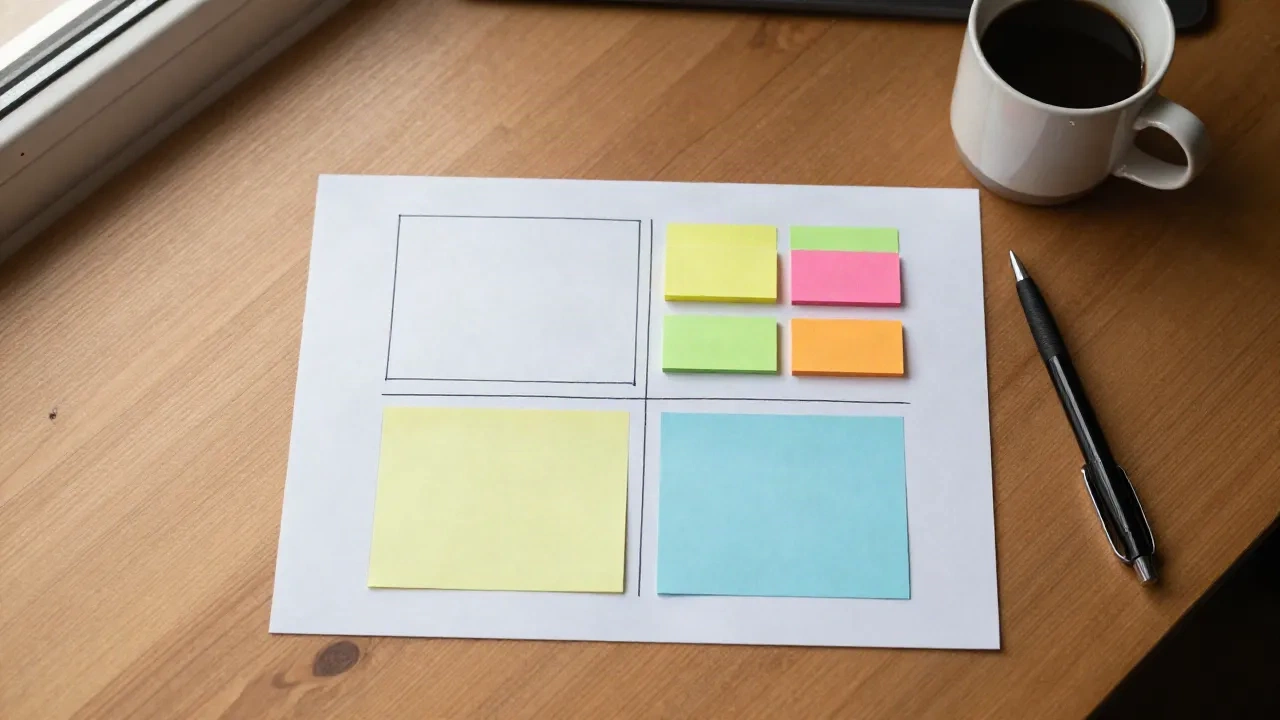
Most SWOT analysis examples you find online are filled in for companies that already exist: a coffee chain, a car maker, a retailer with ten years of sales data. If you are a founder with an idea and no customers, those examples teach you the shape of the grid and almost nothing about how to fill it. Below are four SWOT analysis examples built for pre-revenue and early-stage startups, plus the checks that keep the exercise honest.
Why does a startup SWOT look different from a corporate one?
A large company can fill the "Strengths" box with brand recognition, distribution and cash. A startup usually has none of those. Its real strengths are narrower: a founder who has lived the problem, a cost structure that lets you charge less, a niche that incumbents ignore.
That changes how you read each quadrant. Strengths and weaknesses are internal, so you can verify them by looking at your own team, runway and product. Opportunities and threats are external, which means they need evidence from outside your head: customer conversations, search data, competitor pricing pages.
The common failure is mixing the two. "No competitors in our space" gets written as an opportunity. It is usually a threat in disguise, because it often means nobody has found a paying market there yet. On paper, it holds up. In the field, let's see what catches.
Example 1: A B2B SaaS idea with one founder and a day job
Take a solo founder building invoice-reconciliation software for small logistics firms in Denver and Salt Lake City, still working full time.
Strengths
Eight years inside a freight brokerage, so the workflow pain is firsthand.
Three logistics managers have agreed to a 30-minute call, which is a first customer signal.
Low fixed costs: roughly $120 a month in tools.
Weaknesses
Nights and weekends only, so about 12 hours a week of build time.
No sales experience beyond internal reporting.
No technical co-founder, so every engineering decision is slow.
Opportunities
Two regional carriers publicly complained about manual reconciliation in industry forums.
Existing accounting tools treat freight invoices as an afterthought.
Threats
A large TMS vendor could add reconciliation as a feature.
Small logistics firms renew software slowly and distrust new vendors.
The useful part is not the list. It is what the list forces: the founder cannot honestly claim the product is the strength. The strength is domain access. So the next move is customer conversations, not more code.
Example 2: A consumer AI app that looks strong and is not
A consumer app that generates meal plans from fridge photos. The founders list "AI-powered" as their top strength. That is the most common wrong entry in startup SWOTs, because every competitor can list the same thing by next quarter.
A more honest version:
Strength: a dataset of 40,000 labeled fridge photos the team collected, which a competitor cannot copy quickly.
Weakness: no evidence anyone will pay. Downloads are free, retention after week two is unknown.
Opportunity: grocery prices keep rising, and people are actively searching for ways to waste less food.
Threat: general assistants such as ChatGPT now accept photos and answer the same question for free.
Notice what happened. Once the generic strength is removed, the threat becomes the main story. This is a case where the SWOT does its job by making a founder uncomfortable early, when changing course is still cheap.
Example 3: A bootstrapped niche tool
An indie builder is creating scheduling software for outdoor guide companies. This is the kind of idea where the SWOT should be small and blunt.
Strengths: deep knowledge of permit-based scheduling, a pilot with two guide outfits, no investors to answer to.
Weaknesses: one person, no marketing budget, a market so small that a single lost customer is visible in the numbers.
Opportunities: most guide companies still run on spreadsheets and text messages; seasonal peaks create a clear moment to sell.
Threats: the market may simply be too small to support a business, and a generic booking platform could add permit fields.
The pattern here is that the weakness and the threat are the same fact seen from two sides: size. A good SWOT makes you say it out loud. The next step is a market-size check, which is cheaper than another month of building. Tools like Similarweb can help you size a market by proxy, looking at how much traffic the top players in a category actually receive.
Example 4: A productized service before it becomes software
A founder sells a flat-fee competitor audit to e-commerce brands and wants to turn it into a tool.
Strengths: 14 paying clients, a repeatable process, revenue that already covers the founder's time.
Weaknesses: the work is manual and does not scale past roughly six audits a month.
Opportunities: clients keep asking for a recurring version, and that is demand you can point to.
Threats: low switching costs, and a few freelancers undercut on price.
This is the strongest of the four, and the reason is simple. Every entry is backed by something observable. That is the standard to hold your own grid to.

How do you fill in the grid without guessing?
Three habits separate a useful SWOT from a decorative one.
First, limit each quadrant to three to five items. The Ideaproof guide to SWOT examples makes the same argument: specificity matters more than volume, and "growing fast" fails where "15% month-over-month for six months" passes.
Second, source every external item. For opportunities and threats, go where the audience already talks. A tool such as SparkToro shows where your target customers spend attention and which words they use, which beats brainstorming from a chair. For unprompted complaints about a problem, Crowd Scope surfaces people describing it in plain language across Reddit, Hacker News and other public platforms.
Third, write the decisions, not just the boxes. For every SWOT, finish with three sentences: the strength you will lean on, the weakness you will fix or accept, and the opportunity-threat pair that changes your next 90 days. If the grid does not change what you do on Monday, it was a diary entry.
How long should the exercise take, and who should be in the room?
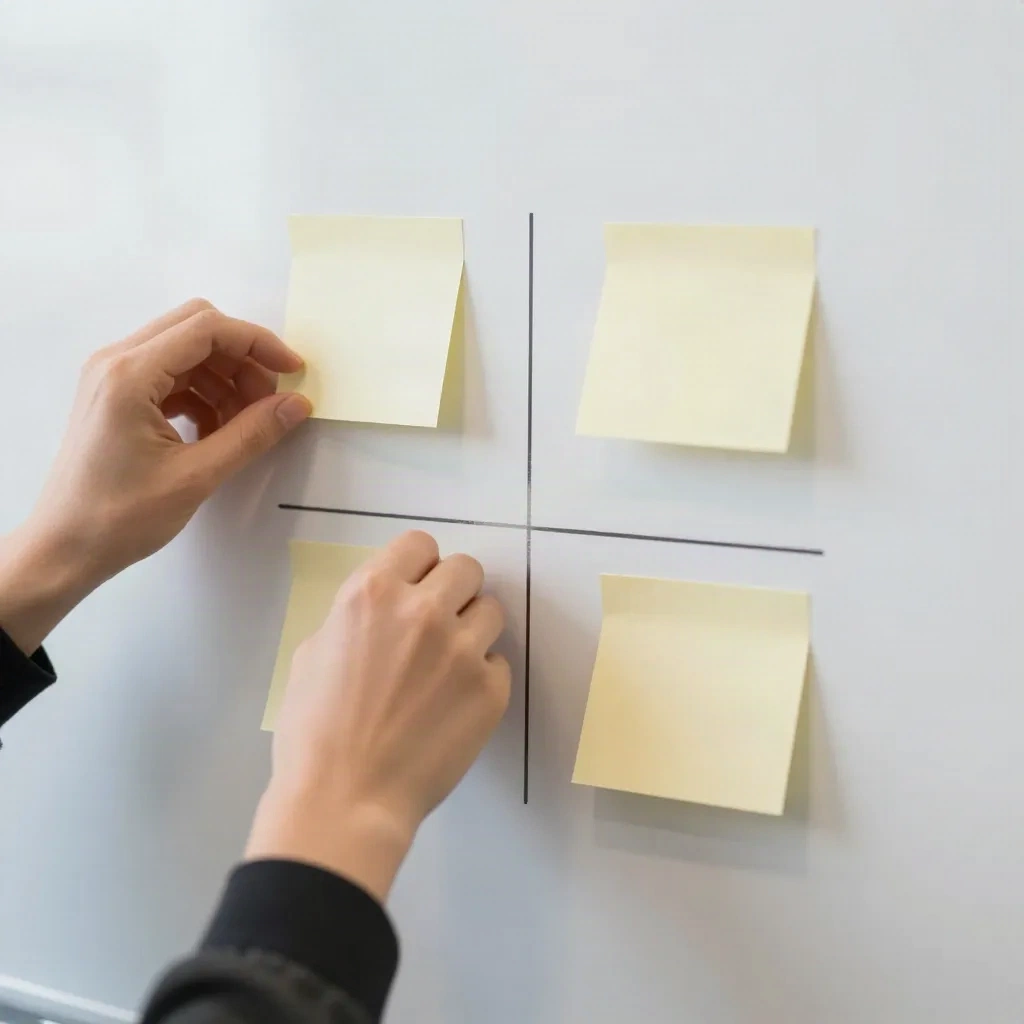
Thirty minutes is enough for a first pass. Frame one question for the next 90 days, such as "Should I quit consulting to build this full time?" Then everyone writes silently for ten minutes, one item per sticky note, before anything is discussed. Silent writing matters because the loudest person otherwise sets the grid.
Merge duplicates, vote, and keep the top three per quadrant. If you are a solo founder, replace the room with two or three people who will disagree with you: a former colleague, a prospective customer, someone who has built and shut down a product. Their job is to challenge the entries you cannot back with evidence.
One useful trick is to rewrite every weakness as a cost. "No marketing experience" becomes "I will spend roughly ten hours a week learning outreach instead of building, for the first two months." Written that way, you can decide whether to accept it, buy your way out of it, or find a partner.
What does a decision look like once the grid is done?
Take example three, the scheduling tool for guide companies. The decision sentences might read: lean on the pilot relationships, accept that the market is small, and test whether ten more outfits will pay $60 a month before writing another feature. That is a concrete experiment with a pass or fail result.
Compare that with the usual output of a SWOT session, which is a laminated grid and a vague sense of progress. The grid itself changes nothing. The sentences underneath it do. Write them at the bottom of the page, date them, and check them again in ninety days to see which ones held.
What the SWOT cannot tell you
Here is what the grid cannot measure: whether anyone will pay. A SWOT is a structured opinion. It organizes what you already believe, which is useful, but it does not test the central assumption of the business.
That is why it works best as a first pass. Use it to surface assumptions, then turn the riskiest one into an experiment: a landing page, five customer interviews, a pre-sale. A 30-minute grid can tell you where to look. Only customers can tell you what is true.
It also goes stale. In a fast-moving market, revisit it every quarter or after any major event: a competitor launch, a failed test, a pricing change. A workspace like Notion is enough to keep a dated version history so you can see how your own beliefs changed.
Which of these SWOT analysis examples should you copy?
Skip the template with 12 items per box. Skip the one that lists "passionate team" as a strength. Copy example four's discipline instead: every line points to something you can check.
If you are pre-revenue, start with the external quadrants and be rude to your own idea. List the three most likely reasons it fails, then ask which one you could test this week. What is the single entry in your grid that you have no evidence for yet?